2026 Chevrolet Corvette Zora : The 2026 Chevrolet Corvette Zora is set to redefine what a Detroit‑born supercar can be.
Positioned as the ultimate evolution of the mid‑engine C8, the Zora marries the fire‑breathing LT7 V‑8 from the ZR1 with the intelligent front‑axle electrification of the E‑Ray, creating a halo car that wears Corvette badges but talks the language of European hypercars.
This isn’t just a faster Corvette; it’s the brand’s most technical, most extreme, and most emotionally charged statement in decades.
The heart of the beast
At the core of the Zora sits the twin‑turbo‑charged 5.5‑liter LT7 V‑8, the same monstrous engine that powers the Corvette ZR1 and already produces around 1,060 horsepower on its own.
Here, Chevrolet layers on a front‑axle electric motor, believed to derive hardware from the E‑Ray, to generate plug‑in‑style hybrid torque without the typical range‑focused compromises.
The combined output is expected to push well beyond the 1,200‑horsepower mark, with torque figures that flirt with or exceed four digits when both power sources work in unison.
This hybrid setup doesn’t just add more thrust; it erases the last vestiges of turbo lag, giving the car near‑instant shove from standstill and brutal mid‑range punch that feels like a continuous tidal wave of acceleration.
Performance numbers that shock
Early estimates and internal projections suggest that the Zora will be capable of sub‑two‑second sprints to 60 mph and quarter‑mile times comfortably under 10 seconds, all while running on a combination of gasoline and electric drive.
The all‑wheel‑drive architecture, enabled by the front‑axle e‑motor, provides a level of traction that previous Corvettes could only dream of, especially exiting corners or launching from traffic lights.
Engineers have tuned the chassis to handle this tsunami of power with a mix of adaptive dampers, track‑oriented anti‑roll bars, and a braking system that reads more like a Formula‑style spec sheet than a street‑car brochure.
The Zora isn’t pretending to be “easy” to drive; it’s built to be brutally honest, rewarding drivers who respect its limits while humiliating lap‑time screens on the track.
Design that bleeds purpose
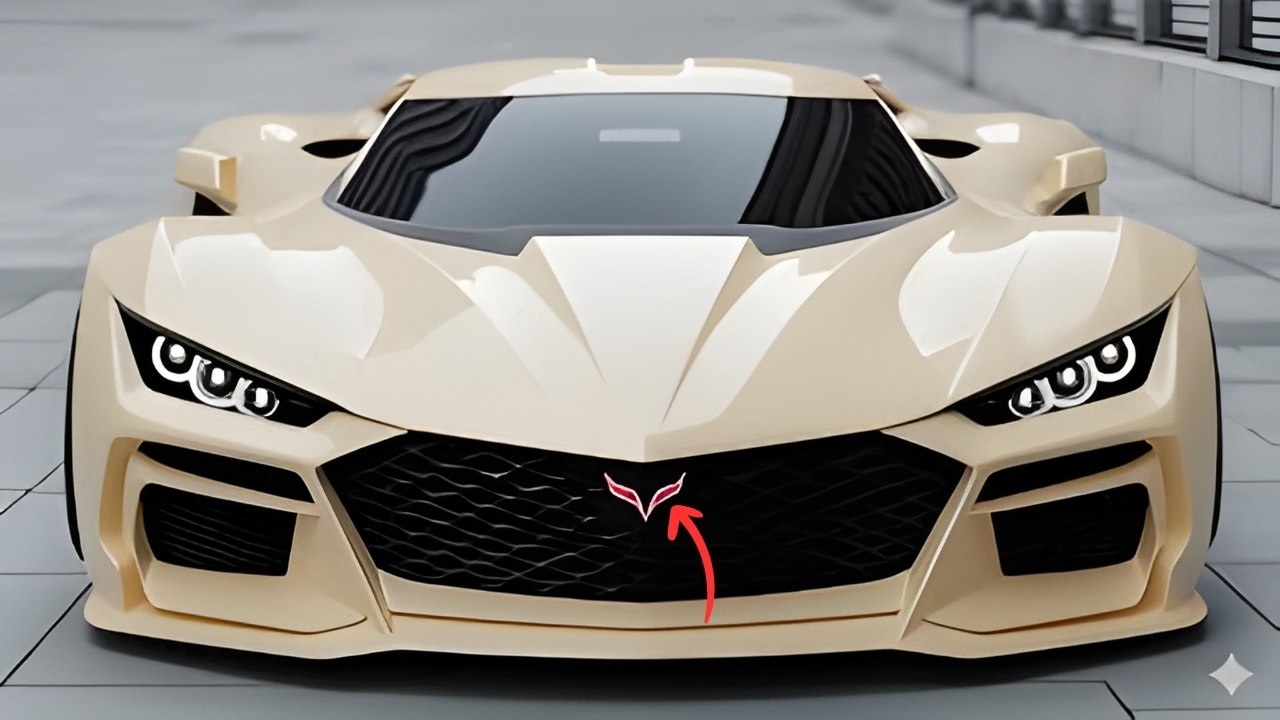
Externally, the Zora carries familiar C8 lines but dressed in a more aggressive, aerodynamic skin. Large front dive planes, enhanced side‑air inlets, and a flow‑through hood advertise the extra cooling its hybrid powertrain and high‑speed stability demand.
A ZR1‑style rear‑end treatment, including a massive rear wing and underbody strakes, helps the car press itself into the tarmac rather than float away at speed. Carbon‑fiber components are used wherever possible, not just to drop weight but to sharpen corner‑weight distribution and improve steering feel.
A cockpit that feels like a cockpit
Inside, the Zora benefits from a major interior refresh trickling down from the 2026 Corvette family. The old, button‑heavy console and sharply angled driver‑facing screen have been replaced with a cleaner, more open layout that feels less like a cockpit partition and more like a shared performance space.
The center infotainment display grows in size and shifts to a more upright orientation, while a digital instrument cluster manages revs, speed, and power‑flow data with theatrical precision.
Physical controls are minimized, but haptic‑style toggles and steering‑wheel buttons remain for critical functions, ensuring that drivers can still adjust drive modes and performance settings without hunting through layers of menus.
Tech that coaches, not distracts
The Zora’s tech stack leans heavily into performance‑oriented intelligence rather than just infotainment. A comprehensive suite of driver‑assistance tools works quietly in the background, monitoring blind‑spot entries, lane‑departure risks, and potential collision scenarios, all tuned to remain helpful rather than intrusive at high speeds.
The hybrid system also includes regenerative braking, allowing the front motor to recover energy under deceleration and meter it back into the sprint phase. A customizable performance display lets drivers toggle between views that show torque‑split between front and rear axles, tire temperatures, and lateral g‑forces, turning the cabin into a real‑time telemetry center.
Everyday ability wrapped in madness
Despite its supervillain statistics, the Zora isn’t designed to be a fragile, one‑way‑ticket‑to‑the‑track oddity. Chevrolet has emphasized that the car should still feel like a Corvette in daily life, not a carbon‑fiber art piece that hates potholes and traffic.
The suspension is expected to switch between a compliant touring mode and a flint‑hard track mode instantly, thanks in part to adaptive damping and multiple drive‑mode presets.
The hybrid front‑motor can also allow for short‑range electric‑only jaunts around town, giving the car a stealthy, near‑silent personality at low speeds before the V‑8 erupts into full‑throttle glory.
Convertible buyers will still get decent storage space, a usable trunk, and a cabin that remains surprisingly quiet when the turbos aren’t spinning at full tilt.
2026 Chevrolet Corvette Zora : The emotional endpoint of the C8 era
The 2026 Corvette Zora arrives as the likely swan song for the internal‑combustion‑centric C8 generation. It takes every high‑performance thread—Z06’s high‑revving V‑8, ZR1’s turbocharged muscle, and E‑Ray’s hybrid wizardry—and weaves them into a single, uncompromising package.
Also Read This : 2026 Toyota Sienna Reborn in Australian supercar market, Ultimate features with rugged 4×4 power
For enthusiasts, the Zora isn’t just another model; it’s the culmination of decades of Corvette evolution, dressed in the language of modern hybrid supercars but still speaking with the thick Detroit accent that defines the brand.