Kia Carnival : Kia Carnival’s return to India has not just re‑entered a segment—it has quietly reshaped how families and entrepreneurs think about a full‑size luxury MPV.
Priced at around ₹59.42 lakh (ex‑showroom) for the sole Limousine Plus 2.2‑litre diesel automatic variant, the Carnival avoids the minivan stigma and positions itself as a premium people‑mover with limousine‑like comfort.
Why India Is Falling for the Carnival
Indian buyers are increasingly treating large seven‑seaters as “family saloons on steroids,” and the Carnival slots right into that mindset.
At over 5.1 metres long, it sits alongside the Toyota Innova Hycross, Maruti Suzuki Invicto and MG M9, but visually it feels more like a small luxury bus than a conventional MPV.
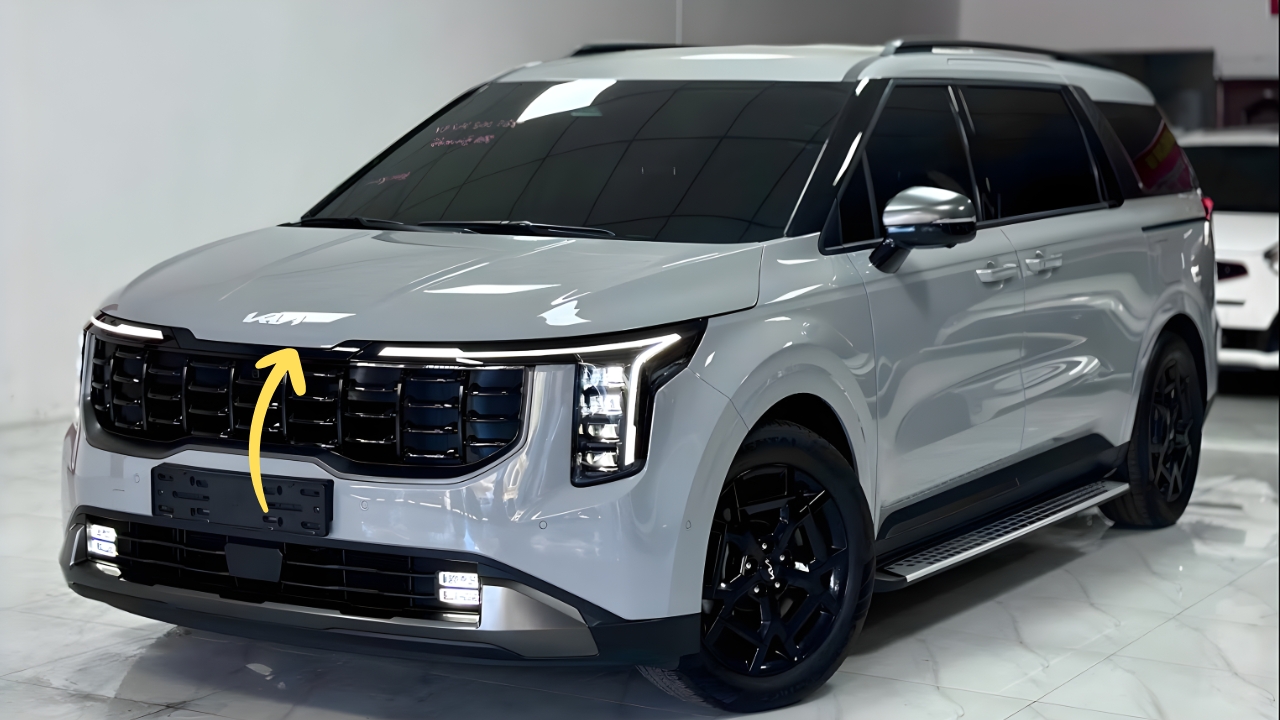
Kia is seeing waiting periods stretch to around six months, a sign that well‑off urban families, fleet operators and even luxury taxi services are queuing up for its first‑class ambience.
The Carnival’s appeal is not just size; it’s about presence. The bold front grille, LED‑only lighting cluster and tall, upright stance give it a board‑room‑ready look, while the long wheelbase translates into generous knee and headroom for all three rows.
For an Indian audience that values comfort in traffic and long highway stints, this is turning Kia’s MPV into a “mini‑bentley” that still fits in a city‑apartment parking slot.
Powertrain and Real‑World Efficiency
Under the bonnet, the India‑spec Carnival sticks with the proven 2.2‑litre diesel turbo engine, good for around 190 bhp and roughly 14.85 km/l in real‑world conditions.
This is more than enough to keep the 2‑tonne MPV relaxed on highways, with the torque ensuring relaxed overtaking even when fully loaded.
Buyers who prioritise smoothness over outright performance will appreciate the six‑speed torque‑converter automatic, which pairs tidily with the diesel for a relaxed, almost loungelike drive.
Importantly, Kia is reportedly working on a petrol‑hybrid version of the Carnival aimed at an India launch by late 2026.
International data suggests this could be a 1.6‑litre turbo‑petrol hybrid with around 242 hp and up to 367 Nm, paired with a 54 kW electric motor and a six‑speed automatic, delivering roughly 14.5 km/l.
For Indian owners worried about diesel‑only running costs and future fuels, this hybrid variant could make the Carnival more accessible and future‑proof.
Ride, Comfort, and Interior Experience
Step inside, and the Carnival feels more like a business‑class cabin than a family car. The limousine‑style layout includes reclining captain seats in the second row, multiple sliding armrests, ambient lighting, powered sliding doors and a smart power tailgate, all of which add to the “first‑class” feel.
The third row is neither an afterthought nor a child‑only seat; adults can actually sit there for meaningful distances, thanks to good legroom and a relatively flat floor.
The diesel engine is reasonably hushed at cruising speeds, and the suspension strikes a good balance between comfort and control, soaking up bad roads without feeling soft or wallowy.
Road and wind noise are better managed than in many large MPVs, and the overall NVH tuning leans toward luxury rather than utility.
For someone who does daily city commutes as well as weekend trips, the Carnival’s cabin isolation and ride quality make it one of the most relaxing large people‑movers in the market today.
Tech, Safety, and the “Premium MPV” Label
Kia has loaded the Carnival with features that nudge it into premium territory. Expect a large touchscreen infotainment system, digital instrument cluster, wireless connectivity, ventilated front seats, a panoramic sunroof, LED lighting all around and a comprehensive 360‑degree camera setup.
The cabin also benefits from extensive sound insulation, multiple USB ports, rear‑seat entertainment options and a host of convenience functions such as heated steering wheel and powered seats, which all contribute to the “flying‑coach” atmosphere.
On safety, the Carnival packs eight airbags, ESC, traction control, ABS with EBD, hill‑start assist, TPMS and ISOFIX child‑seat anchors as standard.
It also features Level‑2 ADAS, including adaptive cruise control, autonomous emergency braking, lane‑keep assist and blind‑spot monitoring, which is rare in India’s MPV segment.
While India has not yet received an official Bharat NCAP rating, the same generation has secured a 5‑star ANCAP rating, promising strong structural protection.
Kia Carnival : The Carnival’s Positioning and Future Outlook
For Kia, the Carnival is not just a family MPV; it’s a halo product that signals the brand’s ambition in the premium space.
It competes with Toyota’s Vellfire as a niche luxury MPV and silently challenges higher‑end crossovers by offering more space, comfort and functionality for a similar price band.
The current limousine‑only trim keeps the lineup simple, but the long waiting period and strong demand suggest that Kia may eventually expand the range with more variants or even a locally assembled production line.
Coming in 2026, the expected petrol‑hybrid Carnivals could open up the model to a broader set of buyers who want luxury without committing to diesel.
Also Read This : Ram 3500 Pickup Truck Unvieled with rugged capacity, high power with fuel efficient
For Indian families, entrepreneurs running chauffeur‑driven fleets, or even premium cab services, the Carnival is increasingly becoming the default “first‑class” MPV—a blend of scale, comfort and technology that feels surprisingly fresh in a market usually dominated by workhorse vans and SUVs.